
Latest News
How Much Desi Ghee Should You Eat Daily? (Adults, Kids & Elders)

Ghee has been part of Indian kitchens for centuries — from drizzling over hot rotis to adding a spoonful in dal or halwa. But with today’s focus on health and fitness, many people wonder: how much ghee per day is actually healthy? Should kids and elders eat it too, and in what quantity?
Let’s break it down in a simple, realistic way so you can enjoy the richness of desi ghee guilt-free.
Why Desi Ghee Deserves a Place in Your Diet
Pure desi ghee is more than just fat — it’s loaded with nutrients that nourish your body from within.
- It contains healthy fats that help absorb vitamins A, D, E, and K.
- The natural CLA (Conjugated Linoleic Acid) in ghee supports better metabolism.
- It promotes joint flexibility, skin glow, and better digestion.
So, ghee isn’t your enemy — it’s your friend when eaten in the right amount.
How Much Ghee Per Day is Healthy for Adults?
For most healthy adults, 1 to 2 tablespoons of desi ghee per day is ideal.
👉 If you lead an active lifestyle, 2 tablespoons (around 25–30 grams) is perfectly fine.
👉 For people with a sedentary routine or weight concerns, limit it to 1 tablespoon (around 15 grams).
The key is moderation — use ghee as a flavor enhancer, not as a deep-frying medium. Replace refined oils and butter with ghee for better health benefits.
Desi Ghee for Kids – How Much is Good?
Growing children need healthy fats for brain development, energy, and strong immunity. Desi ghee for kids is one of the best natural sources for that.
- For toddlers: ½ to 1 teaspoon per day is enough.
- For school-going kids: 2 to 3 teaspoons daily, added to chapati, rice, or dal.
- For active teenagers: up to 1 tablespoon a day, depending on their diet.
Avoid overfeeding — balance ghee with a diet rich in fruits, proteins, and grains.
Daily Ghee Intake for Elders
Elderly people can also enjoy ghee in small portions. A ½ to 1 tablespoon per day is good for joint lubrication and digestion.
However, if they have cholesterol, diabetes, or heart issues, it’s best to consult a doctor before adding ghee regularly. In such cases, using cow ghee in moderation is safer due to its easy digestibility.
Smart Tips for Including Ghee in Your Meals
- Use ghee to sauté vegetables instead of refined oil.
- Add a spoon of ghee to hot dal or khichdi for flavor and better digestion.
- Spread a thin layer of ghee on rotis instead of butter.
- Avoid re-heating ghee at very high temperatures.
The Bottom Line
Daily ghee intake depends on your age, activity level, and overall diet. A small, mindful amount can improve your digestion, energy, and overall wellness.
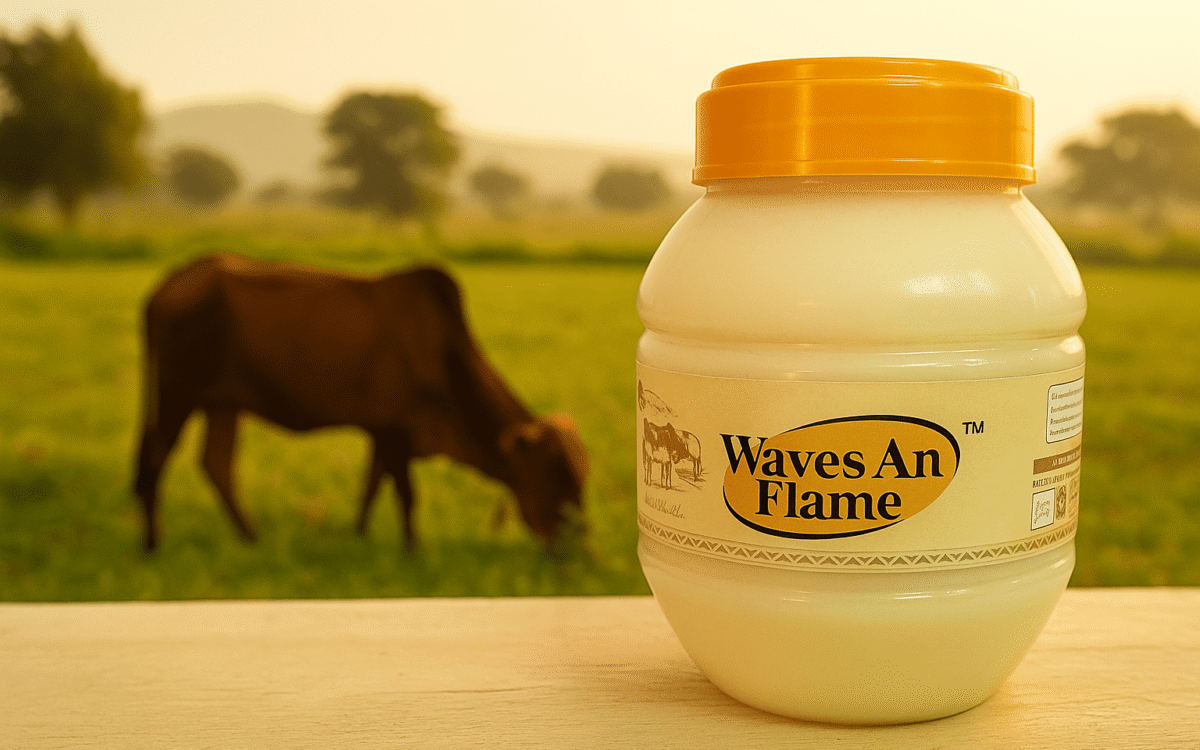
At WavesanFlame.com, we craft pure A2 Bilona Desi Ghee — made traditionally from farm-fresh A2 cow milk. It’s 100% natural, chemical-free, and packed with the authentic flavor of India’s heritage.
✨ Eat pure. Live pure. Choose Waves an Flame Desi Ghee.